Innovator | Researcher | Creative | Writer

About Tlamelo Makati
Co-creating Artificial Intelligence for a More Accessible Digital World.

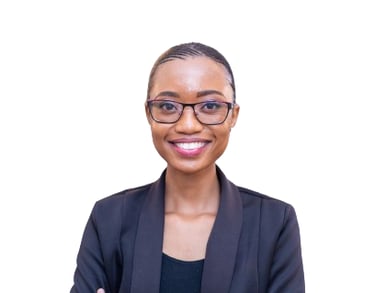
I’m a PhD Candidate at Technological University Dublin, exploring how artificial intelligence can be co-designed with people with lived experiences of disability to advance digital accessibility.
I’m Tlamelo Makati, a PhD Candidate at Technological University Dublin, exploring how artificial intelligence can be co-designed with people with lived experiences of disability to advance digital accessibility.
My work sits at the intersection of AI, human-centred computing, and inclusive design — bridging research, ethics, and lived experience to ensure emerging technologies serve everyone, not just a few.
I believe that the most meaningful innovation happens when people are included in shaping the tools that shape their world.
At the heart of my work is a simple belief: technology should empower, not exclude.
I ground my research in participatory and inclusive design, ensuring that people with lived experiences, particularly those from disability communities, play an active role throughout the AI lifecycle.
Guided by the principle “Nothing About Us Without Us,” I approach technology as a social process, one that must balance innovation with care, ethics, and equity. My goal is to create frameworks and systems that not only work technically, but also align with human values and trust.
I'm a PhD Candidate at TU Dublin's School of Computer Science, funded by Research Ireland and ML-Labs. My doctoral research focuses on participatory approaches to AI for digital accessibility — combining technical investigation with qualitative and co-design methods.
Before my PhD, I earned a Bachelor’s degree in Mechatronics Engineering and worked on interdisciplinary projects at the African Drone and Data Academy and CAIR Lab at Rochester Institute of Technology. These experiences deepened my commitment to exploring how technology can drive social inclusion, particularly across the Global South.
Over the years, I’ve contributed to AI ethics, accessibility evaluation, and human-computer interaction research, while collaborating with academic and community partners in Africa, Europe, and North America.
Introduction
Academic & Professional Background
Values & Research Philosophy
Beyond Research: Creativity & Advocacy
Outside the lab, I’m a writer and poet whose work explores themes of memory, identity, loss, and the tenderness of human connection. My poems and short pieces often move through the spaces between self and community — tracing what it means to belong, to speak, and to be heard. You can find some of my creative work on Ko-fi
Alongside my writing, I’m an advocate and mentor, co-organising the WiMLDS Gaborone Chapter and supporting young researchers from underrepresented communities in STEM. Across both art and research, I’m guided by the same principle: using storytelling and shared experience as tools for empathy, inclusion, and understanding
Links
Experience
PhD Candidate
Technological University Dublin- School of Computer Science
2021 — 2026
My work focuses on Inclusive AI for Digital Accessibility, combining machine learning, HCI, and participatory design to co-design tools with people with lived experience of disability (PLE). My dissertation explores active inclusion across the AI lifecycle, with case studies on web accessibility overlays, reinforcement learning for screen-reader navigation, and supervised content-block classification.
Humboldt Residency Programme Fellow
Alexander von Humboldt Foundation
2024
The 2024 Humboldt Residency Programme tackled “Power & Knowledge,” bringing a transdisciplinary cohort together to confront global imbalances in how knowledge is produced, recognised, and shared—linking research to public outputs (events, media, publications). Within this theme, I focused on public-facing storytelling. I wrote and presented the short film We Don’t Talk Anymore, which uses the cultural, social, and historical significance of Afro hair braiding to show how traditional knowledge has been targeted for erasure and how it still endures.


Contact
I’m always open to collaboration and conversations about inclusive AI and accessibility.
tmakati04@gmail.com
© 2026. All rights reserved.